A peptide listing can look straightforward: compound name, vial size, price, and checkout. Responsible purchasing begins before any of those details. Knowing how to order peptides responsibly means confirming that the material, supplier documentation, intended research use, and receiving environment all align before an order is placed.
For research buyers, procurement is not simply a matter of finding a compound that is available. It is a documentation and controls process. The correct product is only useful when its identity, stated purity, handling requirements, and research-only status can be reviewed and retained by the purchaser.
How to Order Peptides Responsibly Starts With Intended Use
First, establish the intended use in writing. Research-use-only peptide materials are supplied for legitimate laboratory research and analytical purposes. They are not approved drugs, dietary supplements, or veterinary products, and they are not intended for human or animal consumption.
This distinction should shape every part of the purchase decision. A responsible buyer does not use a supplier’s catalog, product descriptions, or testing documents as medical guidance. Product availability does not establish suitability for clinical, therapeutic, diagnostic, or personal use. If a project involves regulated human, animal, clinical, or diagnostic activity, the buyer should work through the appropriate institutional, legal, and regulatory review channels rather than treating a research-material purchase as a substitute for those processes.
Define the study objective, the material specification required, and the laboratory responsible for receipt and use. This gives procurement a clear basis for evaluating whether a listed item fits the project. It also reduces avoidable errors caused by ordering based on a familiar compound name alone.
Confirm Product Identity Before Comparing Price
Peptide nomenclature can be technical, and similar names do not necessarily indicate interchangeable materials. Verify the exact compound name, listed quantity, salt or formulation information where applicable, and any stated molecular or analytical specifications. If the project requires a particular batch attribute or testing method, identify that requirement before checkout.
Price should be evaluated in context. A lower listed price may not represent a lower procurement cost if the product lacks meaningful documentation, arrives without usable lot information, or cannot be reconciled with a laboratory’s inventory controls. Conversely, a higher price alone is not proof of quality. The relevant question is whether the supplier provides clear, consistent information that allows the buyer to assess the material against the project’s requirements.
Review the listing carefully for the product’s stated status and limitations. Responsible suppliers make research-only boundaries visible rather than burying them in checkout language. Buyers should treat those statements as operational requirements, not routine disclaimers.
Match the Material to the Research Plan
Ordering the correct amount is part of responsible procurement. Purchase quantities should reflect the documented scope of the work, the expected analytical needs, available storage capacity, and the laboratory’s approved disposal procedures. Overstocking can create avoidable inventory, stability, and chain-of-custody issues.
The same principle applies to related laboratory materials. If a project requires validated controls, suitable storage supplies, or an approved preparation workflow, those needs should be addressed by the laboratory’s established procedures. A product page cannot replace a project-specific method, safety assessment, or institutional standard operating procedure.
Review Documentation and Quality Signals
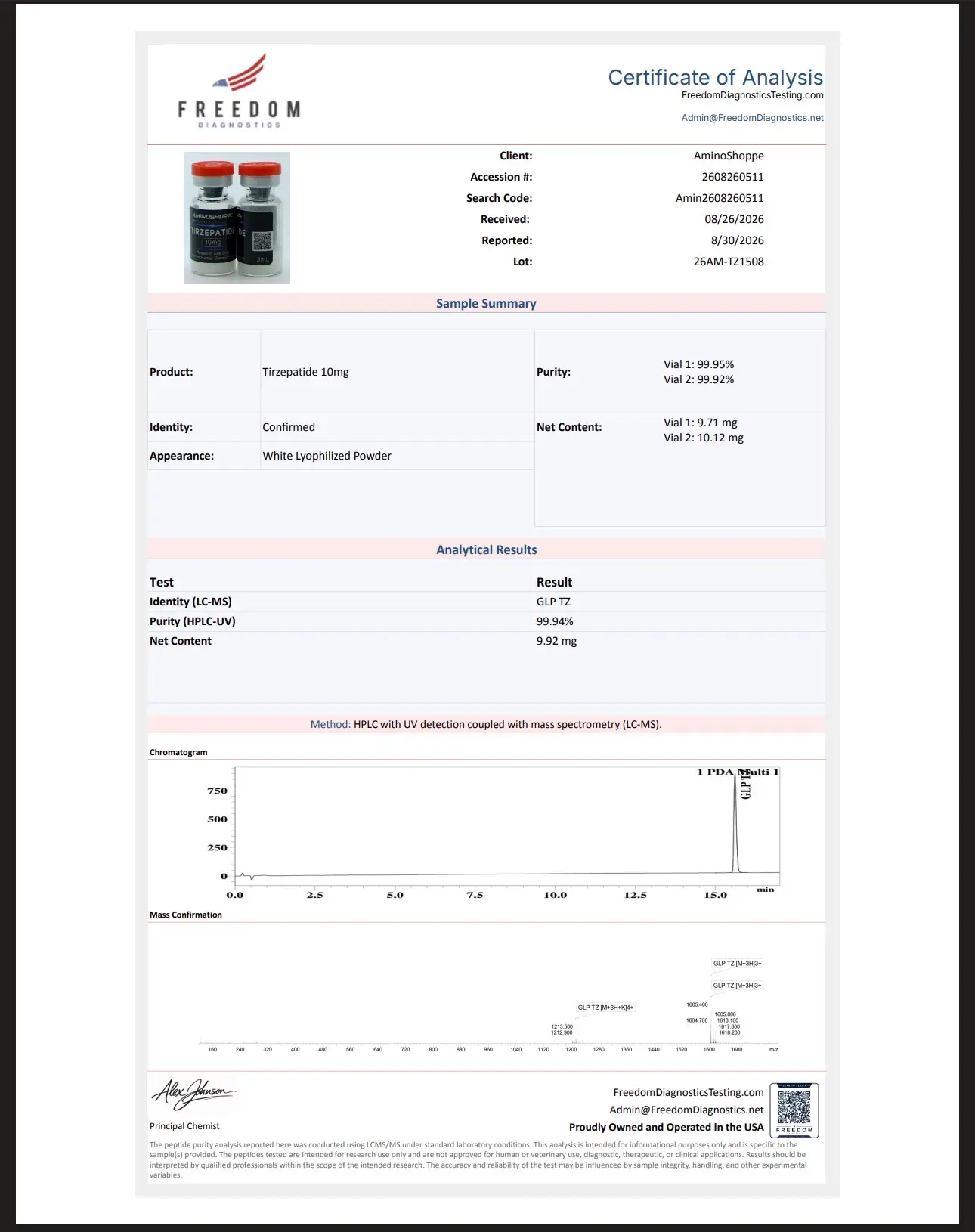
For specialized research compounds, documentation is a core purchasing criterion. Before ordering, determine what quality records are available and whether they are sufficiently specific for the intended work. A certificate of analysis, lot or batch reference, reported purity result, and stated analytical method can help a buyer assess what is being offered.
Documentation should be read, not merely checked for existence. Confirm that the product name corresponds to the item being purchased and that the associated lot information is usable for internal records. Look for reasonable consistency between the listing, the certificate, and the material received. If a document is unclear, incomplete, or unrelated to the product configuration under consideration, pause the purchase decision until the discrepancy is resolved.
U.S. laboratory testing and accessible certificates of analysis can be meaningful supplier trust signals when paired with transparent product identification. They are not a license to make unsupported claims about research outcomes, safety in living systems, or suitability outside the stated research-use boundary. Analytical documentation supports material evaluation. It does not change the product’s regulatory status.
A responsible supplier should also communicate with precision. Vague claims such as “pharmaceutical grade” or broad promises of results are not substitutes for product-specific records. Favor suppliers that state their research-only limitations clearly, identify their testing practices, and provide information that procurement personnel can retain with project files.
Evaluate the Supplier Beyond the Product Page
A responsible order requires confidence in the supplier’s operating practices, not just the product title. Review whether the business provides clear contact information, accessible policies, defined terms of sale, and direct statements about age qualification and permitted use. These details indicate whether the seller treats specialized materials as controlled research products rather than casual consumer goods.
Consider the full transaction path. Are product descriptions internally consistent? Is pricing presented clearly? Does the supplier explain how orders are processed and what documentation accompanies the material? Are research-use-only restrictions repeated at meaningful points in the purchase process? Clear answers help purchasers make defensible procurement decisions.
AMINOSHOPPE, for example, positions its peptide and laboratory-material catalog around U.S. lab testing, certificates of analysis, and an explicit research-only purchasing boundary. Buyers should still review the documentation for the specific item and lot relevant to their project. Supplier-level quality language is useful context, but project records should always be product-specific.
Be cautious with sellers that obscure identity, omit documentation, make medical or performance claims, or encourage use outside a controlled research setting. Those signals create unnecessary compliance and quality risk. A purchase should be easy to justify to a laboratory manager, procurement reviewer, or institutional compliance team.
Prepare for Receipt, Storage, and Recordkeeping
Ordering is only one stage of responsible handling. Before shipment is expected, confirm that an authorized adult will receive the package and that the receiving location is appropriate for laboratory materials. Establish where the item will be logged, who can access it, and how its label and accompanying records will be preserved.
Upon receipt, compare the shipment against the purchase record. Confirm the product identity, quantity, packaging condition, and lot or batch details. Retain the invoice, certificate of analysis, product description, and internal inventory entry together when possible. If there is visible damage, a labeling mismatch, or a missing record, quarantine the material according to laboratory policy and contact the supplier before use.
Storage and handling must follow the supplier’s stated conditions and the laboratory’s own safety procedures. Do not infer stability, compatibility, or preparation requirements from a compound’s name or from informal online discussion. The right conditions depend on the specific material, its supplied form, the intended analytical work, and the controls in place at the facility.
Keep Compliance at the Center of Reordering
Repeat orders deserve the same level of review as the first purchase. Lot changes, updated documentation, revised listings, and new project requirements can affect whether a material remains appropriate for a given study. A prior order is a useful record, not an automatic approval.
Maintain a simple procurement file for each material: the intended research purpose, order date, supplier, product configuration, lot documentation, receiving record, storage location, and final disposition. This level of traceability is practical for independent researchers and essential for organized laboratory operations. It also makes discrepancies easier to identify before they become larger quality problems.
Responsible peptide procurement is disciplined rather than complicated. Purchase only for legitimate laboratory research, verify the material and its documentation, respect research-only limitations, and ensure the receiving laboratory can control the product from delivery through disposition. That approach protects the integrity of the work long after the checkout confirmation arrives.
Related Posts

HPLC Versus Mass Spectrometry for Research
A chromatogram with one clean peak can be reassuring, but…

NAD Plus Research Uses in Cellular Metabolism
NAD+ is not simply a metabolic cofactor listed on a…

Peptide Quality Control for Research Materials
A vial label and a stated purity percentage do not,…