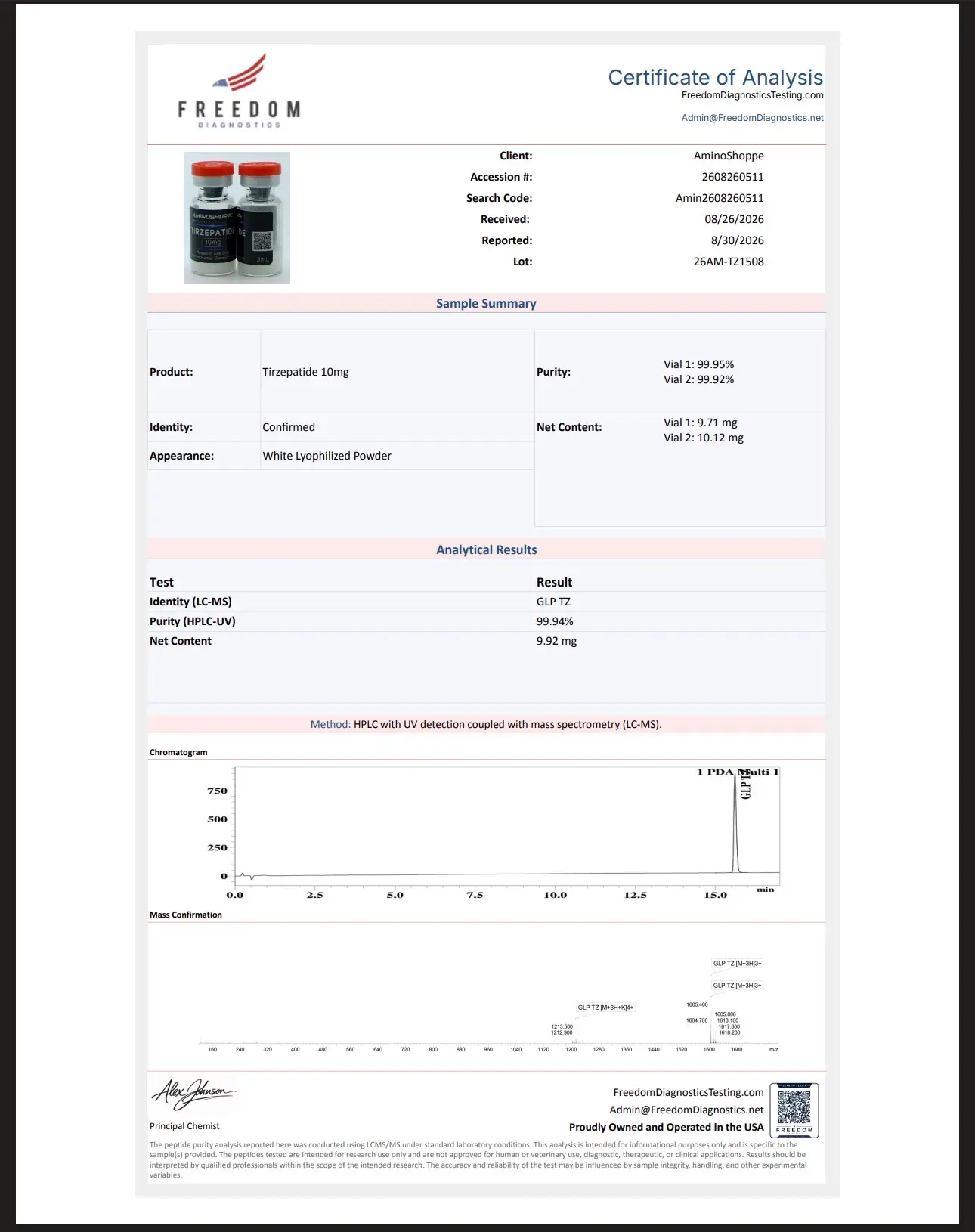
A product listing can say 99% purity, third-party tested, or lab verified. None of those claims mean much on their own unless the supporting documentation is specific, current, and traceable. If you are asking what is certificate of analysis COA, the short answer is this: it is the formal test record that identifies a material, states the batch tested, and reports the analytical results used to verify quality attributes.
For research buyers, a COA is not a marketing extra. It is part of basic documentation review. When you source peptides, mitochondrial compounds, or related laboratory materials, the COA helps you confirm that the material received aligns with the lot tested and that the reported values match the specification framework being used.
What is certificate of analysis COA in practical terms?
A certificate of analysis, commonly abbreviated COA, is a quality document issued for a specific batch or lot of material. It typically includes the product name, lot number, test methods, specification limits, and actual analytical results. It may also include the testing laboratory, date of analysis, reference standards, storage conditions, and authorized review or release information.
The key point is batch specificity. A valid COA is tied to a particular production lot, not just a general product type. If a seller provides a generic purity statement without a matching lot number, that is not the same as lot-level analytical documentation.
In a research supply setting, the COA serves two functions at once. It supports identity and quality review before purchase or use, and it creates a record that can be retained for procurement, inventory, and internal documentation purposes.
What a COA usually includes
The exact format varies by manufacturer or testing laboratory, but most COAs contain a common core of information. First is material identification. This includes the compound name and often a catalog reference, internal item code, or molecular descriptor.
Next is lot traceability. The batch or lot number on the COA should match the lot associated with the product being shipped. That is one of the first details a careful buyer checks, because even a well-constructed COA has limited value if it is not tied to the exact material received.
The analytical section is where the document becomes useful. This is where you will usually see tests such as identity, assay or purity, appearance, moisture content, residual solvents, or related substances, depending on the compound and the methods used. A result by itself is not enough. The COA should also show the acceptance criteria or specification so the reader can see whether the material passed.
Most COAs also include dates. The date of manufacture, date of analysis, retest date, or release date can all matter. Some compounds remain stable for long periods under controlled conditions, while others are more sensitive to temperature, light, moisture, or repeated handling. A COA that is technically complete but outdated may still raise questions, especially for materials with narrower handling tolerances.
Finally, there should be some sign of authorization or review. That may be a signature, digital approval, lab manager release, or quality unit authorization. The format varies, but the purpose is the same: to indicate that the data was reviewed and formally issued.
How to read a certificate of analysis
A COA is only useful if it can be interpreted correctly. Start with the basics. Confirm the product name, concentration or presentation if applicable, and lot number. If any of these do not match the item being purchased or received, pause there.
Then review the test panel. For many research compounds, purity is the first result buyers look for, often based on HPLC or a similar method. That is understandable, but purity is not the whole story. Identity testing matters just as much because a high-purity result is only meaningful if the compound is correctly identified. Depending on the material, other tests may provide important context, including water content, acetate content, peptide content, or solvent residues.
Next, compare result to specification. A reported result should sit against a stated limit or acceptance range. If the COA says purity is 99.2% and the specification is not shown, you have less context for evaluating what standard is being applied. A stronger COA makes the pass or fail framework visible.
Look at the test methods as well. A COA that references recognized analytical methods, instruments, or validated internal procedures generally gives more confidence than one that only lists broad claims. That said, method detail can vary based on the supplier, the laboratory, and how much information is disclosed on the customer-facing document.
Why COAs matter when sourcing research compounds
For procurement-minded buyers, the value of a COA is straightforward. It reduces uncertainty. In a market where product pages can look similar from one seller to the next, documentation quality often reveals the difference between a serious research supplier and a loose reseller operation.
A COA supports purchasing decisions before checkout and receiving decisions after delivery. Before purchase, it helps verify whether a supplier presents real lot-level quality data. After delivery, it gives the buyer a basis for confirming that the material received corresponds to the tested batch.
It also supports internal recordkeeping. Labs, private research operations, and technically informed independent buyers often retain COAs alongside invoices and inventory logs. This is especially useful when multiple lots of the same compound are purchased over time and consistency matters.
There is also a compliance dimension. In a research-only supply environment, documentation should be disciplined and clear. A supplier that emphasizes testing, batch traceability, and research-use-only positioning is generally signaling that quality control is part of the transaction, not an afterthought.
What a COA does not prove
This is where some caution is necessary. A COA is important, but it is not a complete guarantee of overall product quality. It reports the results for the tested sample and batch under the methods and conditions used. It does not replace proper storage, handling, transport review, or receiving inspection.
It also does not mean every possible quality attribute has been tested. The relevant test panel depends on the material type, supplier standards, and intended research context. One COA may be sufficient for a buyer’s needs, while another buyer may want deeper supporting documentation such as chromatograms, method references, or additional lab records.
There is also a difference between manufacturer-issued and third-party tested documentation. Neither is automatically invalid, but they are not identical from a review standpoint. Third-party testing can add confidence through independence, while manufacturer documentation can still be acceptable if the data is complete, traceable, and supported by a controlled quality process. It depends on the supplier, the lab, and the buyer’s documentation threshold.
Common issues buyers should watch for
Some COAs look official but offer very little usable information. A missing lot number is one of the clearest problems. If the certificate cannot be tied to a specific batch, its value is limited.
Another issue is overly generic language. Phrases like tested for quality or passed inspection sound reassuring, but they do not tell the buyer what was tested, by what method, or against what acceptance criteria. A proper COA should contain actual analytical data.
Inconsistent formatting can also be a warning sign, especially if product identity, dates, or result fields appear incomplete. That alone does not prove a document is invalid, but it does justify closer review. Serious buyers should also pay attention to whether the testing date makes sense relative to availability and whether the documentation appears current for the lot being sold.
For that reason, quality-focused suppliers often center their documentation practices around U.S. lab testing, lot traceability, and accessible COA review. For a company such as AMINOSHOPPE, that kind of documentation is part of how research buyers assess sourcing discipline before placing an order.
What is certificate of analysis COA really telling you?
At its best, a COA tells you that a specific batch of material was tested, under stated methods, and found to meet defined criteria. That does not remove the need for buyer judgment, but it gives that judgment something concrete to work with.
For research compounds, that is the standard worth looking for. Not broad claims, not recycled product copy, and not documentation that stops at a purity headline. A usable COA is specific, traceable, and tied to the material in front of you.
When a supplier makes that documentation available and the details hold up under review, the transaction becomes much clearer. That is usually the point where a technical buyer can move from skepticism to procurement with a better level of confidence.
Related Posts


Guide to Peptide Batch Documentation for Labs
A vial label and a certificate of analysis should tell…

Retatrutide vs Tirzepatide Research: Key Differences
Retatrutide vs tirzepatide research is often reduced to a simple…