A vial label has a narrow but consequential job: identify the material accurately, communicate its permitted use, and prevent a research compound from being presented as something it is not. This guide to peptide compliance labeling is designed for suppliers, research buyers, and small laboratory operators who need documentation and packaging language to remain clear from product selection through receipt and handling.
For research-use-only materials, labeling is not a cosmetic exercise. The label, product page, certificate of analysis, packing documentation, and customer-facing statements should all describe the same material in the same terms. When those records conflict, even a properly tested compound can appear poorly controlled.
Why Peptide Labels Need a Compliance-First Approach
Peptides and related bioactive compounds are often sold using recognizable technical names, such as BPC 157, GHK-Cu, SS-31, MOTS-C, or Tirzepatide. Familiarity creates a labeling risk. A technical compound name does not authorize therapeutic claims, dosage instructions, or language that implies suitability for human or veterinary use.
A compliant research-material label should establish boundaries without obscuring the product identity. It must be specific enough for inventory control and laboratory traceability, while remaining direct about the intended research-only classification. Broad statements such as “for laboratory use” may be less useful than a plainly stated restriction that the material is not for human or animal consumption.
The exact label requirements may depend on the product category, packaging format, jurisdiction, shipping method, and applicable federal or state rules. Internal review by qualified regulatory and legal personnel is appropriate where labeling decisions could affect classification or distribution. Compliance language should not be treated as a substitute for a complete regulatory assessment.
Core Elements of Peptide Compliance Labeling
A well-controlled vial or outer package label typically brings together identity, traceability, quantity, handling information, and use restrictions. The goal is not to crowd every possible detail onto a small vial. The goal is to ensure the immediate container and its accompanying documentation work together without creating ambiguity.
For most research-use-only peptide materials, the following elements should be evaluated:
- Product identity, including the compound name and any applicable salt, ester, or copper-complex designation.
- Net quantity or labeled content, stated in a consistent unit such as milligrams or grams.
- Lot or batch number that connects the item to testing records and internal inventory documentation.
- A clear research-use-only statement, including a direct restriction against human or animal consumption.
- Storage and handling conditions when applicable, such as temperature, light protection, or moisture-control requirements.
- Supplier identification or a traceable business identifier, particularly when the vial may be separated from its original shipment materials.
The immediate vial label should prioritize the information needed to identify the material if it is removed from the outer carton. The outer label, insert, or accompanying documentation can carry additional details where space is limited. This hierarchy reduces the temptation to use tiny, unreadable text that fails in practical handling conditions.
Use the Exact Product Name
Product naming needs discipline. A label should match the product name used on the certificate of analysis, product listing, invoice, and fulfillment record. If the testing document identifies a compound as GHK-Cu, the label should not switch to a vague phrase such as “copper peptide” without retaining the precise identity.
Where a product is supplied in a particular form, that form matters. A free base, acetate salt, trifluoroacetate salt, or lyophilized preparation may require distinct naming. The same principle applies to a stated concentration or fill amount. Do not represent nominal vial capacity as the actual peptide content.
Abbreviations can be useful for experienced research buyers, but they should not create uncertainty. If an abbreviated name is used on a small vial, the outer label or product documentation should provide the complete technical identity.
Make the Research Restriction Unmistakable
For a research supplier, the central restriction should be prominent and unqualified: for laboratory research use only; not for human or animal consumption. The wording should be readable at the point of receipt and handling, not buried beneath marketing copy or printed only in an online disclaimer.
Avoid statements that undermine this boundary. Language about administration, dosing, treatment outcomes, weight management, recovery, anti-aging effects, or performance enhancement can change how a product is understood by a buyer or reviewer. The same concern applies to imagery or product organization that suggests a consumer health use.
A disclaimer cannot cure conflicting claims. If a label says “research use only” but the surrounding product presentation describes physiological benefits or provides instructions for use in people or animals, the compliance message is no longer consistent. Restrictive language must be supported by the full product presentation.
Align Labels With Testing and Quality Records
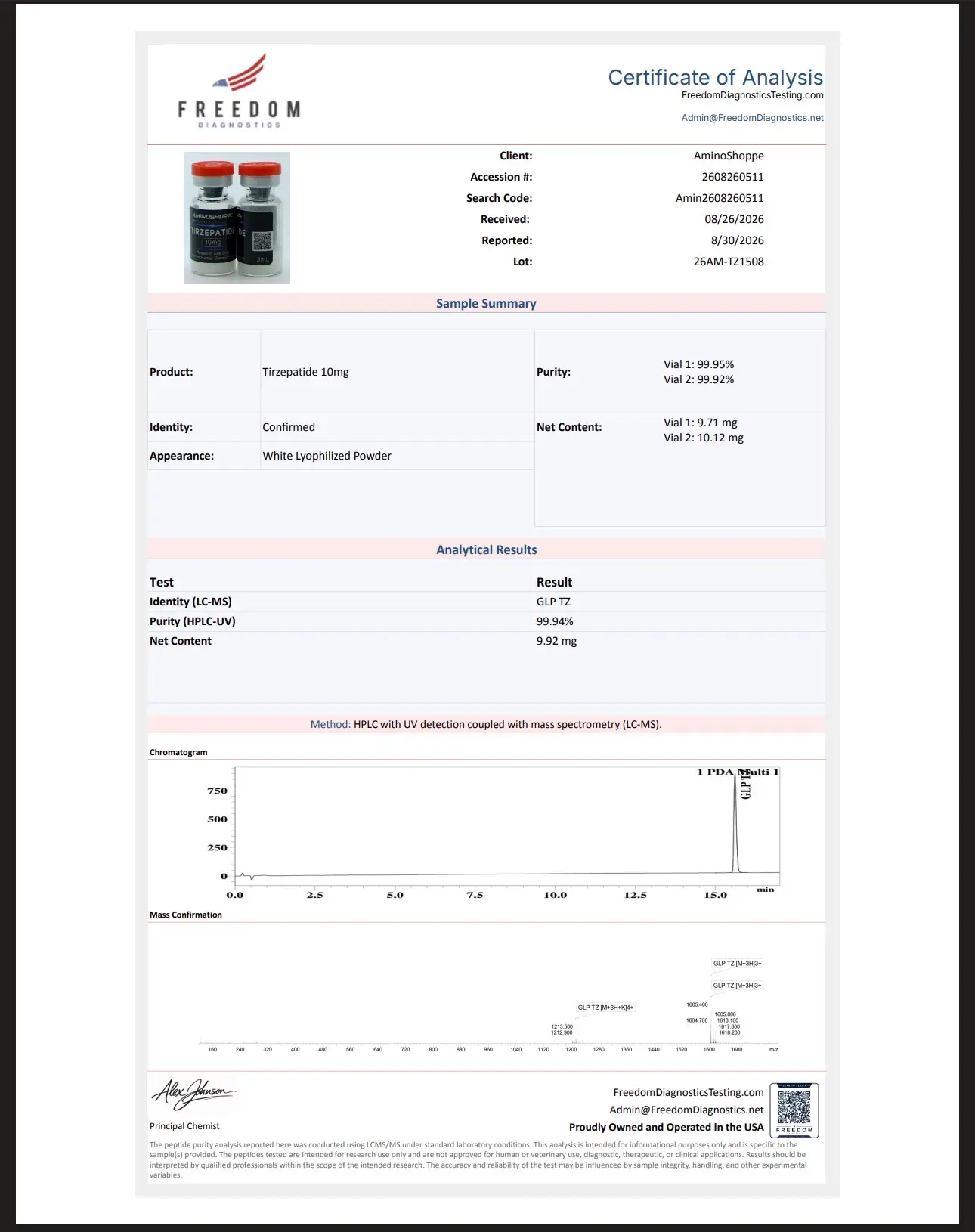
Testing documentation is meaningful only when the product in hand can be connected to that documentation. The lot number is the practical bridge between a vial, a certificate of analysis, and the supplier’s retained quality records.
Each lot identifier should be unique, legible, and applied consistently. A certificate of analysis should identify the tested material, the lot or batch, relevant test methods or results, the testing laboratory or responsible party, and the date or documentation reference appropriate to the supplier’s quality process. Product labels should not claim a purity value that cannot be supported by the associated documentation.
There is also a difference between saying a material was tested and implying a broader regulatory approval. Terms such as “lab tested,” “third-party tested,” or “U.S. tested” should be used only where records support the specific statement. They should not be paired with claims that suggest the material is approved, safe for consumption, pharmaceutical-grade for patient use, or suitable for diagnosis.
At AMINOSHOPPE, quality documentation and research-use boundaries should reinforce each other: testing supports identity and consistency, while labeling defines the permitted context of use. Neither claim should overreach the evidence available.
Packaging, Storage, and Chain of Custody
The label is only one part of controlled presentation. A high-quality label that detaches under refrigeration, smears with condensation, or obscures a lot number is not operationally reliable. Material selection, adhesive performance, print contrast, and vial curvature should be checked under expected storage and handling conditions.
Storage statements should be based on the supplier’s available stability information and packaging design. Avoid adding storage claims simply because they are common in the category. If a product requires protection from heat, light, or repeated freeze-thaw cycles, those directions should appear consistently on the vial, outer packaging, and product documentation where applicable.
For receiving teams and independent researchers, preserving the original labeled container is a sound traceability practice. If a material must be transferred into another container for laboratory workflow, the new container should retain the product name, lot number, concentration or amount, date of transfer, and applicable research-use restriction. Internal relabeling should not remove the information needed to identify the material later.
Build a Review Process Before Product Release
The most reliable way to prevent labeling errors is to review the label before inventory is released, not after customers receive it. A controlled approval process can be concise, but it should require a comparison of the proposed artwork against the product specification, testing records, online listing, and fulfillment configuration.
A practical review asks several direct questions. Does the compound name match the certificate of analysis? Does the stated amount match the product specification? Is the lot field present and readable? Are research-use restrictions clear? Does any word or image imply consumption, treatment, dosing, or medical use? Are storage statements supported?
Version control matters as much as the initial review. When a label is revised, retain the approved version, effective date, reason for change, and the person responsible for approval. This is especially useful when products are repackaged, lot formats change, or a catalog adds a new compound variant.
What Buyers Should Verify at Receipt
Research buyers should inspect the label before placing a material into inventory or beginning a study. Confirm that the compound name, amount, and lot number match the order documentation and any provided certificate of analysis. Check that the vial is intact, the label is legible, and stated storage conditions were maintained during receipt when relevant.
If the lot number is missing, the label does not match the documentation, or the product is presented with unclear use claims, stop and request clarification before proceeding. A prompt question at receiving is easier to resolve than an identity discrepancy after a material has entered a research workflow.
Clear peptide compliance labeling protects more than a shipment. It gives each vial a traceable identity, keeps research-use boundaries visible, and helps qualified buyers handle specialized materials with the discipline their work requires.
Related Posts

Bacteriostatic Water vs Sterile Water Differences
A vial labeled Water for Injection may look interchangeable at…

How to Evaluate Compound Documentation Before Purchase
A certificate of analysis can look credible while providing very…

Retatrutide Assay Review for Research Buyers
A retatrutide assay review should begin with a basic distinction:…