A BPC 157 research peptide should be evaluated as a laboratory material, not as a consumer wellness product. For procurement teams and independent researchers, the relevant questions are direct: Is the material correctly identified? Is supporting analytical documentation available? Are storage and handling conditions stated? Does the supplier clearly maintain research-use-only boundaries?
BPC 157 is commonly described in research catalogs as a synthetic peptide associated with a sequence derived from a larger gastric protein fragment. Interest in the compound has generated broad discussion, but discussion is not a substitute for verified material identity, controlled handling, or appropriately designed research protocols. Materials sold for laboratory research require the same disciplined review applied to any specialized peptide standard or test article.
What Defines a BPC 157 Research Peptide
BPC 157 is typically supplied as a lyophilized peptide for controlled laboratory applications. Its identity is generally described by its amino acid sequence and molecular characteristics, while its suitability for a specific project depends on the research question, experimental design, method validation, and institutional requirements.
A catalog description alone should not be treated as a complete analytical record. Researchers should distinguish between product labeling, which identifies what is being offered, and batch-specific documentation, which supports claims about the material received. This distinction matters most when a project requires consistent sourcing across multiple experiments or when findings may depend on sample comparability.
No BPC 157 material should be represented or used as a drug, dietary supplement, veterinary product, or treatment. It is not approved for human or animal consumption. Research-use-only labeling is a defined handling boundary, not a marketing qualifier.
Documentation Comes Before Procurement
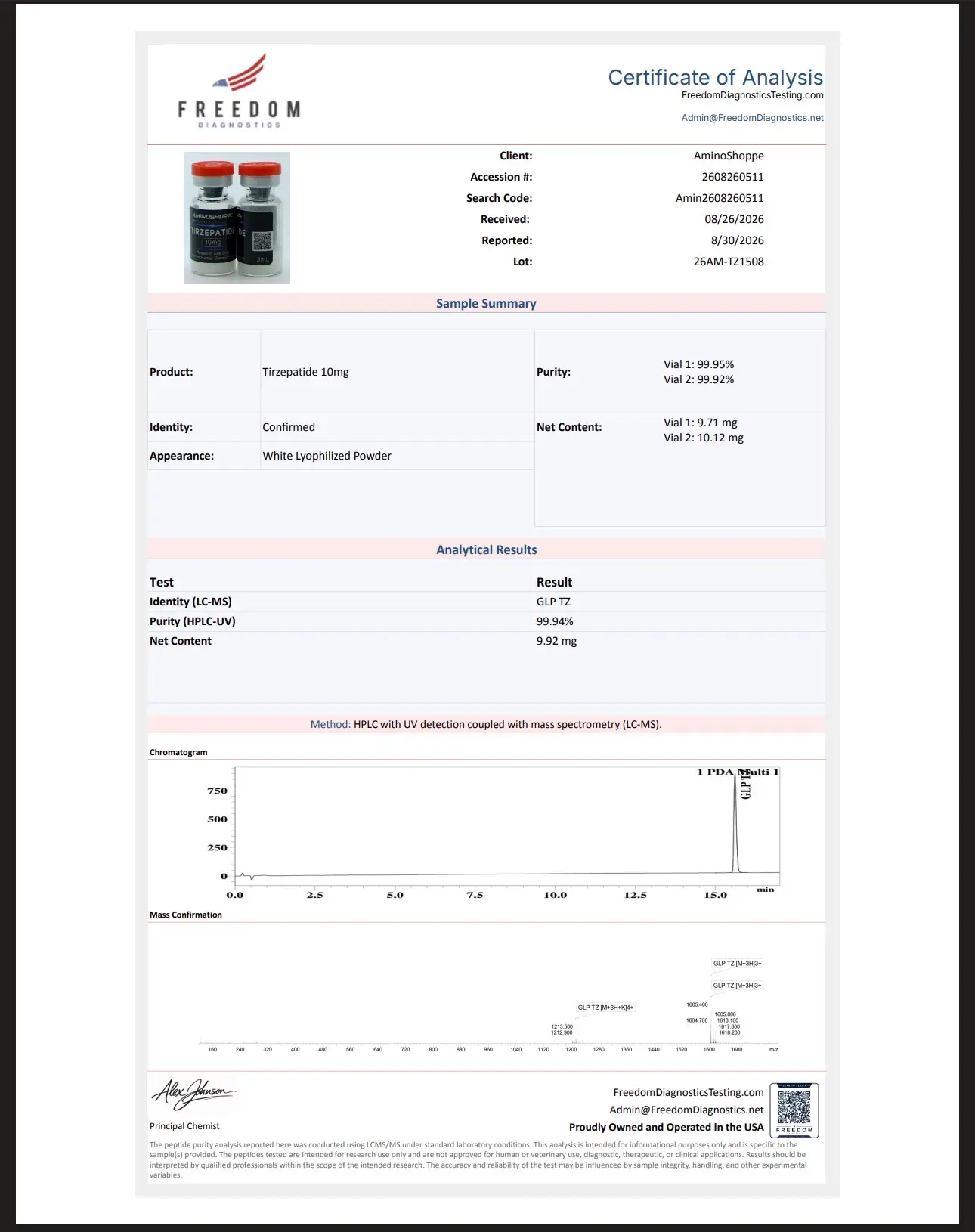
For a BPC 157 research peptide, documentation is one of the first procurement controls to review. A certificate of analysis can provide a useful snapshot of the supplier’s quality process, particularly when it identifies the lot or batch and reports the analytical methods used. The exact contents can vary by supplier and material type, so buyers should confirm what is included rather than assuming every certificate presents the same level of detail.
Identity and Purity Records
Identity testing is intended to support that the peptide corresponds to the stated analyte. Common analytical approaches for peptides may include mass spectrometry and chromatographic methods. Purity is often reported using high-performance liquid chromatography or a related chromatographic technique.
A purity percentage does not answer every research question on its own. It should be considered alongside identity confirmation, lot traceability, and the stated test method. If a protocol is sensitive to closely related impurities, residual solvents, moisture, counterions, or degradation products, additional specifications may be necessary. The appropriate review depends on the intended laboratory method.
Lot Traceability
Lot-level traceability connects a physical vial to its supporting records. At minimum, researchers should be able to reconcile the product name, lot number, quantity, and analytical documentation before introducing the material into a study.
This practice also supports reproducibility. If results later need to be reviewed, the laboratory should be able to identify the exact material used, its receipt date, storage history, and preparation record. A well-organized chain of documentation is more useful than a general claim that a compound has been tested.
Supplier Claims and Independent Review
Quality statements should be specific enough to evaluate. Terms such as “high purity” or “premium grade” have limited value when they are not paired with identifiable testing information. Clear references to lot documentation, analytical methods, and testing practices provide a more practical basis for procurement review.
For buyers who require an added level of confidence, internal verification or third-party analytical testing may be appropriate. This can be especially relevant for projects with stringent acceptance criteria, regulated workflows, or long study timelines. Supplier documentation supports purchasing decisions, but it does not remove the laboratory’s responsibility to assess material suitability.
Storage, Handling, and Record Control
Peptides can be affected by moisture, temperature, light exposure, repeated freeze-thaw cycles, and handling conditions. Storage instructions supplied with the product should be followed, and laboratory procedures should document any reconstitution, aliquoting, or transfer steps used during the project.
The specific storage plan should reflect the supplier’s instructions, the compound format, and the laboratory’s validated practices. Researchers should avoid making informal assumptions based on how another peptide was handled. Two materials may appear similar in a catalog while having different stability considerations or preparation requirements.
When preparing a material for a research workflow, use appropriate laboratory equipment, controlled labeling, and records that preserve traceability. If bacteriostatic water or another laboratory reagent is used in a protocol, it should be selected and handled according to the study’s established method and applicable laboratory procedures. Reconstitution guidance should come from validated research requirements, not consumer-use content.
Research Design Should Drive Material Selection
The question is not simply whether BPC 157 is available. The question is whether the available material has the documentation and characteristics needed for the planned work. Early-stage exploratory work may have different procurement requirements than a comparative analytical study, a stability exercise, or a project intended to generate repeatable datasets.
Before ordering, researchers should define the acceptance criteria relevant to the protocol. These may include peptide identity, minimum purity specification, required documentation, quantity, lot continuity, packaging format, and expected storage conditions. Establishing these criteria before comparing suppliers reduces the risk of purchasing based on price alone.
Price remains a valid procurement consideration, but it should be viewed in context. A lower listed cost may not represent the lower project cost if documentation is incomplete, a lot cannot be traced, or additional verification is required after receipt. Conversely, extensive documentation may exceed the needs of a preliminary method-development project. The right standard depends on the work being performed.
Compliance Boundaries for Research Materials
BPC 157 research materials must be purchased, stored, and used only by qualified adults in legitimate laboratory, academic, or independent research settings. They are not intended for administration to people or animals, and no product description, research discussion, or analytical record changes that restriction.
Responsible suppliers make this boundary visible throughout the purchasing process. Clear research-use-only language helps reduce ambiguity for buyers and supports appropriate catalog classification. It also signals that the supplier understands the difference between supplying laboratory materials and making medical, therapeutic, or performance claims.
Laboratories should maintain their own controls as well. These can include restricted access, inventory records, appropriate labeling, safe storage, waste procedures, and review of applicable local, state, and federal requirements. Procurement documentation and laboratory governance work together. Neither replaces the other.
A Practical Review Before You Order
A focused pre-purchase review can prevent avoidable issues. Confirm that the listing identifies BPC 157 clearly, that lot-specific or otherwise relevant analytical documentation is available, and that the material is plainly designated for research use only. Review the available quantity, packaging, storage information, and any stated limitations before placing an order.
AMINOSHOPPE approaches research-material sourcing with an emphasis on product documentation, U.S. lab testing, and clear research-only qualification. Buyers should still evaluate each material against their own protocol requirements and laboratory controls.
Careful procurement is part of careful research. When the documentation, traceability, storage plan, and intended laboratory use are aligned before a vial is received, the work begins on firmer ground.
Related Posts

How to Verify Peptide Purity Before Research
A peptide labeled 99% pure may be appropriate for one…

Guide to Online Lab Sourcing for Researchers
A listing can display a familiar compound name, a purity…

What Does US Lab Tested Mean for Research?
A product page marked “US lab tested” is making a…