A bacteriostatic water review should begin with a basic procurement question: does the product’s labeling, packaging, and documentation support the specific research workflow being planned? For laboratories purchasing related materials online, bacteriostatic water is a controlled accessory product, not a generic convenience item. The difference is visible in the label details, quality records, container integrity, and research-use boundaries.
Bacteriostatic water is commonly described as sterile water containing a bacteriostatic preservative, typically benzyl alcohol. That description is useful, but incomplete for purchasing purposes. A research buyer should evaluate the actual product specification rather than assume that every vial sold under a familiar name is equivalent.
What This Bacteriostatic Water Review Evaluates
For research procurement, a useful review does not treat product availability as proof of suitability. It evaluates whether the listing provides enough information to identify the material, assess handling expectations, and maintain accurate internal records.
The central review criteria are straightforward: clear identity labeling, declared preservative information, container format, lot-level traceability where available, storage information, and documentation that corresponds to the product being ordered. These details help distinguish a research supply listing from an underspecified commodity offering.
Bacteriostatic water should also be assessed in context. It may be relevant to certain laboratory handling or reconstitution workflows, but compatibility depends on the specific research material, protocol, analytical objective, and institutional procedures. It is not a universal substitute for other water grades or buffers.
Product Identity and Labeling Matter First
A usable label should make it easy to determine what is in the container without relying on a product-page headline alone. At a minimum, research buyers should look for the product name, fill volume, stated preservative, lot or batch identifier when provided, and applicable storage or handling language.
Where benzyl alcohol is present, its stated concentration matters. A commonly encountered bacteriostatic water specification uses 0.9% benzyl alcohol, but purchasers should confirm the concentration on the specific product label or supporting record. Do not infer composition from a category name, product image, or a third-party description.
The distinction between bacteriostatic water and sterile water is also operationally relevant. Sterile water is not automatically bacteriostatic, and a preservative-containing product is not automatically appropriate for every assay, material, or workflow. Preservatives can be a variable in sensitive experimental systems. A laboratory evaluating solvent effects, cell-based responses, analytical background, or compound stability should account for that variable during protocol design.
Packaging Is a Quality Signal, Not a Cosmetic Detail
Container quality affects how a material is received, inventoried, and handled. A review should consider whether the vial appears appropriate for controlled research use: intact closure components, legible labeling, protected packaging, and no visible evidence of leakage, damage, cloudiness, or compromised seals.
Upon receipt, document the condition of the shipment before adding the material to inventory. This is particularly useful for independent research settings where one person may be responsible for receiving, storage, and experimental records. If the vial label is incomplete or the container condition raises a question, pause the workflow and contact the supplier before use.
Fill volume should be evaluated as part of the purchase decision, not after delivery. A smaller vial may reduce unnecessary inventory for a limited project, while a larger format may better fit a recurring validated workflow. Neither option is automatically superior. The correct choice depends on expected consumption, protocol controls, storage capacity, and the laboratory’s policy for opened materials.
Documentation Should Match the Material, Not Just the Brand
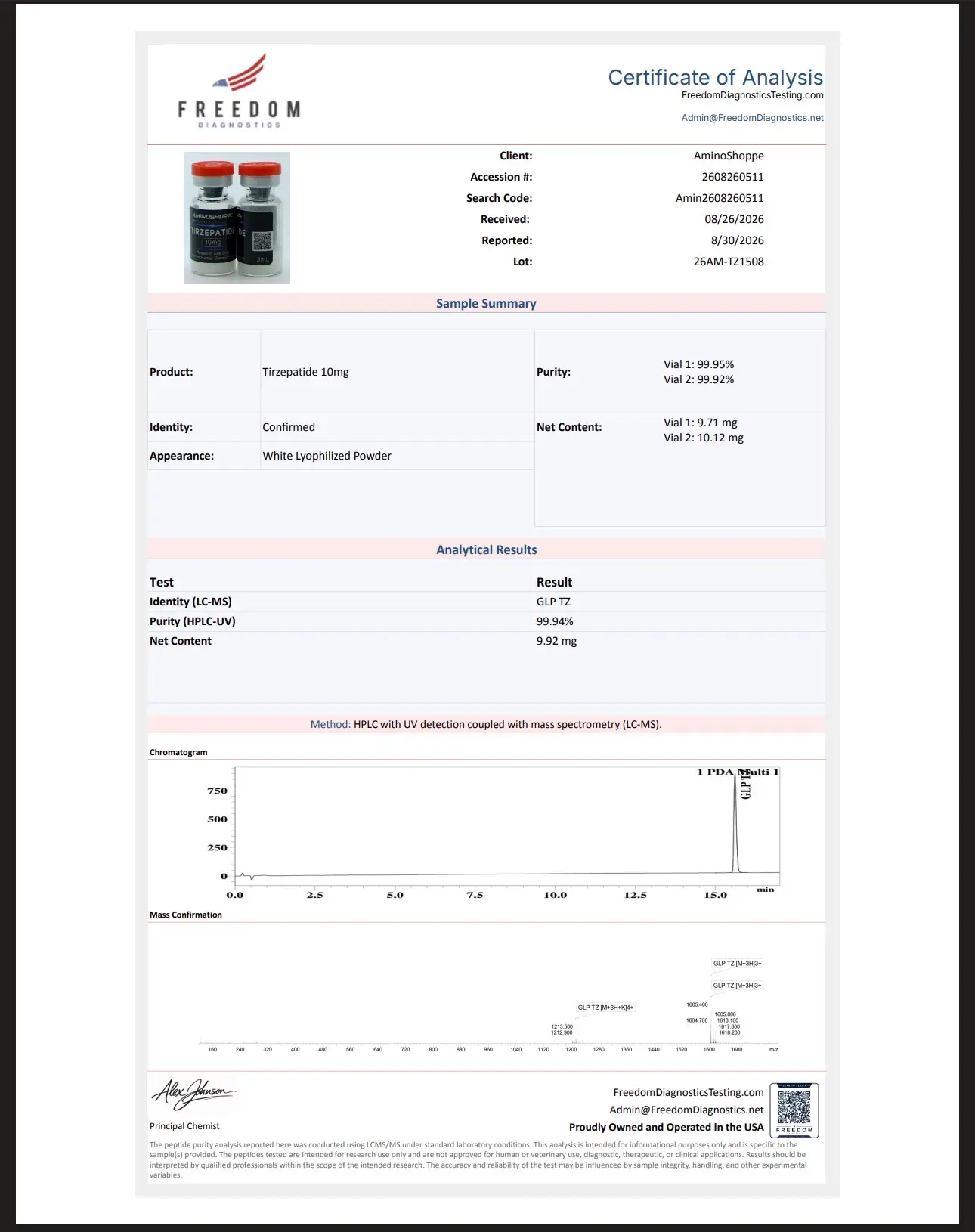
Quality documentation is useful only when it is relevant to the item under review. A certificate of analysis, when supplied, should be examined for product identity, associated lot or batch information, test date, reported specifications, and the identity of the testing entity. A general quality statement is not the same as lot-specific documentation.
For bacteriostatic water, buyers should be realistic about what documentation can establish. A record may support identity and listed specifications, but it does not replace a laboratory’s own suitability assessment for a particular research application. The necessary level of review depends on the project. Early exploratory work may have different documentation requirements than regulated, validated, or publication-oriented research.
AMINOSHOPPE positions its catalog around U.S. lab testing and research-use-only sourcing. Buyers should still review the documentation attached to the exact product and lot whenever that level of verification is required by their internal process. Product-level evidence is more useful than broad marketing language.
Questions to Ask Before Purchasing
A short pre-purchase review can prevent avoidable receiving and documentation issues. Confirm the stated fill volume and preservative information, verify whether lot-specific records are available, and determine whether the offered format fits the planned research workflow. Also review the supplier’s research-use restrictions and ensure the order can be received and stored under your organization’s procedures.
If an experiment requires preservative-free material, a different water grade may be more appropriate. If a protocol specifies a particular diluent, follow that protocol rather than substituting based on product availability. Procurement convenience should not override a validated method.
Storage, Handling, and Traceability
Storage conditions should be taken directly from the product label and applicable supplier documentation. Avoid relying on generic online advice, since specifications and packaging can differ among products. Maintain the original label, preserve associated order records, and record lot details in the laboratory inventory system or research notebook.
Bacteriostatic water is not a treatment product, and it is not intended for human or animal consumption. Research buyers should keep this boundary explicit in purchasing, labeling, storage, and internal communication. Materials sold for laboratory research should remain within controlled research use and should be handled only by qualified personnel in accordance with applicable procedures and regulations.
Traceability becomes more valuable when a project evolves. If an unexpected experimental result requires review, the ability to identify the supplier, product listing, lot, receipt date, storage history, and related research material can narrow the investigation. That discipline is especially relevant when working with specialty peptides, mitochondrial compounds, or other sensitive research materials where variables should be controlled as tightly as practical.
Value Depends on More Than the Unit Price
The lowest-priced vial is not necessarily the lowest-cost procurement choice. An incomplete listing, unclear composition, poor packaging, or unavailable documentation can create delays that outweigh a small difference in purchase price. Conversely, a premium price does not establish quality on its own. The value case rests on verifiable specifications, transparent records, dependable fulfillment, and fit with the intended research process.
For recurring orders, establish a consistent receiving checklist. Confirm product identity against the purchase record, inspect the container, capture lot details, retain supporting documents, and store the material according to labeled requirements. This approach creates a repeatable quality-control step without turning a routine purchase into an unnecessary administrative burden.
When Bacteriostatic Water May Not Be the Right Choice
The presence of a bacteriostatic preservative is the defining trade-off. It may be useful for certain research contexts, but it may also be unsuitable where a preservative could interfere with the target material, analytical method, or experimental system. Researchers should review the method requirements before selecting a diluent or handling material.
A product may also be unsuitable if the required documentation is absent, the packaging arrives compromised, the labeling does not clearly state the relevant specification, or internal policies require a different grade of water. In each case, the correct response is to stop and resolve the discrepancy, not to make assumptions from a product category label.
A disciplined bacteriostatic water review is ultimately a small but meaningful part of research quality control. Select the material that can be clearly identified, documented, stored, and justified within the actual protocol, then keep the records needed to support that decision later.
Related Posts

A Laboratory Guide to Peptide Solubility
A peptide that appears simple on paper can become a…

How to Check Lab Test Certificates Before Buying
A certificate of analysis should let a research buyer connect…

BPC 157 COA Standards for Research Buyers
A BPC 157 certificate of analysis is not merely a…